
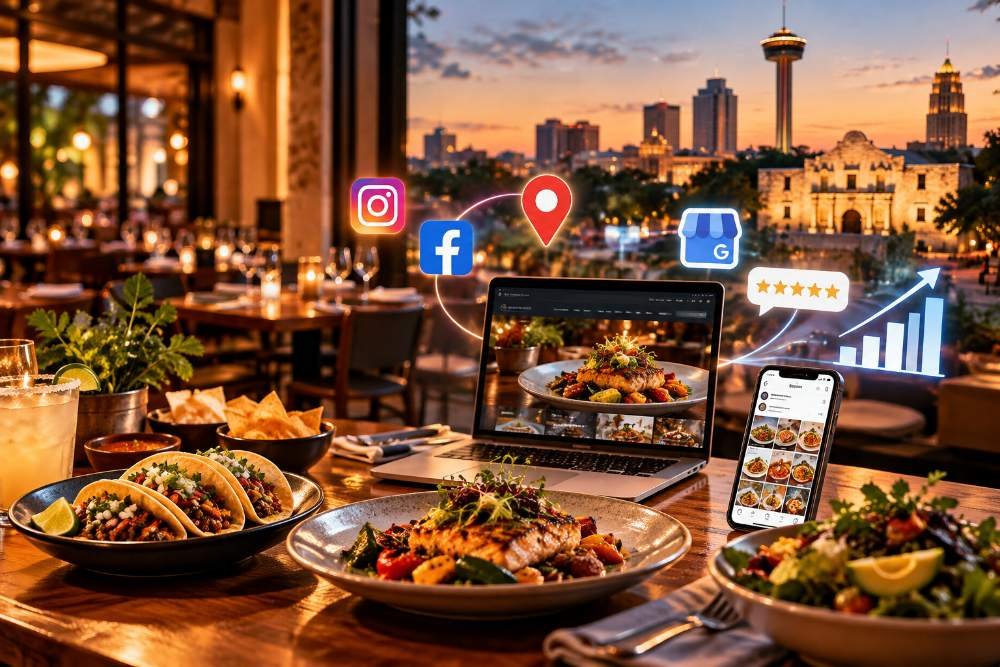
San Antonio is one of the most competitive restaurant markets in Texas — from Tex-Mex institutions and BBQ joints to new concepts opening every month across the city. With so many options, a great menu alone isn’t enough. Diners choose where to eat based on what they see on Google, Instagram, and review sites long before they walk in the door. This guide covers how San Antonio restaurants can market effectively and where to focus first.
Why Restaurant Marketing Is Different
Restaurants face marketing dynamics that differ from most other local businesses:
- Decisions happen fast and visually — diners often decide where to eat within minutes, heavily influenced by photos, reviews, and how a restaurant appears in map search.
- Repeat business drives profitability — unlike one-time purchases, a loyal repeat customer base is what makes most restaurants sustainable, making retention as important as new customer acquisition.
- Local discovery dominates — most restaurant searches happen on mobile, with “near me” and cuisine-specific queries driving a large share of new customers.
- Social proof is everything — reviews, photos, and social media presence directly influence whether a new diner takes a chance on your restaurant.
Core Marketing Channels for Restaurants
Google Business Profile and Local SEO
For most restaurants, Google Maps and local search are the single most important discovery channels. A fully optimized Google Business Profile — accurate hours, current menu, high-quality photos, and consistent posts — directly affects how often your restaurant appears when San Antonio diners search nearby.
Social Media, Especially Instagram and TikTok
Food is inherently visual, making Instagram and TikTok especially effective for restaurants. Short-form video showing dishes, kitchen moments, and behind-the-scenes content often performs well organically and builds familiarity with local audiences.
Reputation Management
Reviews on Google, Yelp, and other platforms heavily influence dining decisions. A consistent process for encouraging reviews from happy customers and professionally responding to all feedback protects and strengthens your reputation over time.
Email and SMS Marketing
A direct line to past customers is one of a restaurant’s most valuable marketing assets. Email and SMS campaigns promoting specials, events, and loyalty offers drive repeat visits at very low cost compared to paid advertising.
Paid Social Advertising
Meta ads targeting nearby diners can effectively promote new menu items, events, or grand openings, especially when combined with strong visual content and a clear, time-sensitive offer.
Website and Online Ordering Experience
A fast, mobile-friendly website with an up-to-date menu, clear hours, and easy online ordering or reservations makes it simple for interested diners to convert into actual customers.
Building a Restaurant Marketing Plan
- Optimize your Google Business Profile first — accurate info, quality photos, and active posting form the foundation of local discovery.
- Build a consistent social media presence — focus on the platforms where your target diners spend time, prioritizing quality short-form visual content.
- Create a review generation habit — make asking for reviews part of your regular operations, not an occasional effort.
- Start capturing customer contact information — email and SMS lists give you direct, low-cost access to repeat customers.
- Layer in paid ads for launches and promotions — use paid social strategically for grand openings, new menu items, and seasonal events.
Marketing a New Restaurant Opening
A grand opening is one of the most important marketing moments for a new restaurant. Effective pre-opening strategy typically includes building anticipation through social media teasers, claiming and optimizing your Google Business Profile before doors open, partnering with local food influencers or community groups, and planning a limited-time opening offer to drive early foot traffic and generate initial reviews.
Common Marketing Mistakes Restaurants Make
- An outdated Google Business Profile with incorrect hours or an old menu
- Low-quality or infrequent food photography
- No consistent system for requesting reviews
- Relying only on third-party delivery apps without building a direct customer relationship
- Inconsistent social media posting, followed by long gaps with no activity
How to Choose a Marketing Partner for Your Restaurant
- Look for restaurant or hospitality experience — ask specifically about past restaurant clients and results.
- Review their visual and content quality — for restaurants especially, strong food photography and short-form video quality directly affect results.
- Ask how they approach local discovery — Google Business Profile and local SEO should be a core part of any restaurant marketing strategy.
- Confirm they understand repeat customer strategy — a good partner focuses on retention through email, SMS, and loyalty tactics, not just new customer acquisition.
Why Restaurants in San Antonio Choose Sila Creations
At Sila Creations, we build marketing strategies specifically for the realities of running a restaurant — from Google Business Profile optimization and social media content to review generation and email and SMS campaigns that drive repeat visits. Whether you’re launching a new concept or growing an established location, we help you build consistent visibility across the channels San Antonio diners actually use.
If you’re evaluating marketing partners for your San Antonio restaurant, we’re happy to walk through our approach to local discovery, social content, and customer retention — with full transparency from day one.
Frequently Asked Questions
What’s the most important marketing channel for a restaurant?
For most restaurants, Google Business Profile and local search are the most important, since a large share of diners find restaurants through map search and “near me” queries, especially on mobile.
How often should a restaurant post on social media?
Consistency matters more than volume. Most restaurants see good results posting several times per week on their primary platform, with a mix of dish photos, short-form video, and behind-the-scenes content.
How can a restaurant get more online reviews?
The most effective approach is making review requests a consistent part of operations, such as including a QR code or link on receipts or table cards, and following up via email or text after visits when possible.
Should my restaurant use third-party delivery apps?
Delivery apps can expand reach, but they come with significant commission fees and limit direct customer relationships. Many restaurants use them selectively while also promoting direct online ordering through their own website to retain more margin and customer data.
How do I market a brand-new restaurant before it opens?
Start building anticipation early through social media teasers, claim your Google Business Profile before opening, engage local food influencers and community groups, and plan an opening offer that drives early traffic and initial reviews.
Do paid ads work for restaurants?
Yes, especially when used strategically for grand openings, new menu launches, or seasonal promotions, combined with strong visual creative and a clear, time-sensitive offer targeting nearby diners.